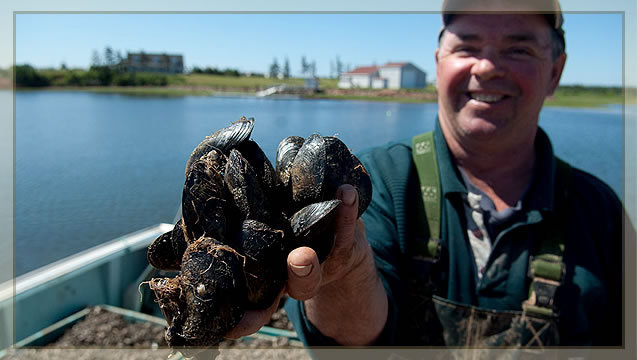
The safety of its customers and products is a primary concern for the management and staff of Prince Edward Aqua Farms. The plant maintains a certified Food Safety program and stringently follows shellfish preparation, cleaning, grading and bagging guidelines. All shellfish produced at the plant comes from federally-inspected waters. Prince Edward Aqua Farms has an on-site lab and technician to provide the facility with current and immediate means of testing and maintaining quality control standards. To further ensure that the final product to the consumer is of optimum quality, Prince Edward Aqua Farms also maintains a strict traceability process so that they may trace every mussel from consumer to source.
Prince Edward Aqua Farms follows the guidelines of the Canadian Shellfish Sanitation Program, which ensures all farmed shellfish meet the approved federal water quality criteria. The shellfish are harvested, transported and processed in an approved manner which reduces the possibility of consumer illness due to contaminated or poor quality shellfish. Prince Edward Aqua Farms believes strongly in their food safety practices before and after the product is purchased or shipped.
The following are some tips for shellfish storage to help ensure the best possible shellfish experience.
- Keep shellfish cold.
- Refrigerate as soon as possible.
- Shellfish should smell like fresh ocean water.
- Discard any shellfish with shells that may appear cracked or opened.
- Check expiry date on tags or check packing date.
* Based on proper refrigeration. Storage conditions may vary.
Certifications
Prince Edward Aqua Farms is fully-licensed by the Canadian Food Inspection Agency and is registered with the United States Food and Drug Administration. It is the only shellfish processing facility on PEI that is federally-approved to purchase shellfish harvested from waters with certain levels of bacteria for cleaning and processing through the depuration process.
The plant is also HACCP (Hazard Analysis and Critical Control Points) certified. HACCP is a systematic preventive approach to food safety that addresses physical, chemical, and biological hazards as a means of prevention rather than finished product inspection.
Prince Edward Aqua Farms is fully-licensed by the Canadian Food Inspection Agency and is registered with the United States Food and Drug Administration. It is the only shellfish processing facility on PEI that is federally-approved to purchase shellfish harvested from waters with certain levels of bacteria for cleaning and processing through the depuration process.
The plant is also HACCP (Hazard Analysis and Critical Control Points) certified. HACCP is a systematic preventive approach to food safety that addresses physical, chemical, and biological hazards as a means of prevention rather than finished product inspection.
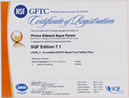

Prince Edward Aqua Farms Inc, has most recently been recognized as an innovator in the PEI Mussel Industry by achieving Safety Quality Food Certification (SQF) - Edition 7.1 Level 2.
At our processing facility located in New London, Prince Edward Island, our employees strive every day to provide the safest, most consistent quality product available for distributors and consumers.
* NSF International conducted a 3rd paty audit of our processing facility using Certification Facility Audit -Edition 7.1 - Level 2.
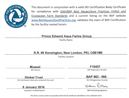

Prince Edward Aqua Farms has earned BAP certification, making it the world’s second mussel farm to attain Best Aquaculture Practices (BAP) certification since the completion of the BAP mussel farm standards.
The new BAP mussel farm standards encompass all production systems for mussels, including cultivation on suspended cultures such as long-line culture and raft-and-rack culture. There are currently, more than 700 aquaculture facilities worldwide that are BAP certified, so this recognition is helping to put our business on the global map.
Best Aquaculture Practices is an international certification program based on achievable, science-based and continuously improved performance standards for the entire aquaculture supply chain that assure healthful foods produced through environmentally and socially responsible means. BAP certification is based on independent audits that evaluate compliance with the BAP standards developed by the Global Aquaculture Alliance.